Words, both spoken and written, mark human persons, each of whom has been created in the image of the Divine Word, who was made flesh and dwelt among us. Today, owing to increasing educational options and ever-advancing technologies, human persons and their use of words face opportunities and threats of a degree never encountered before. Are we up to the challenge? Have we adequately grappled with this brave new world of the human word?
Come explore these questions with accomplished Catholic professionals.
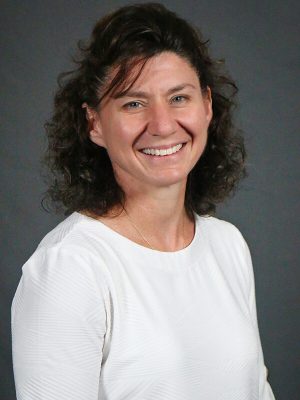
Dr. Kelly Anderson is Associate Professor at Saint Charles Borromeo Seminary, Chair of the Department of Sacred Scripture, and a member of the Board of Trustees. She translated a book from Italian (“…Perché io sono mite e umile di cuore” (Mt 11,29) Studio esegetico–teologico sull’umiltà del Messia secondo Matteo. Dimensione cristologica e risvolti ecclesiologici), co–authored James, First, Second and Third John for the Catholic Commentary on Sacred Scripture Series, and participated in the Revised Translation Project of the New Testament for the USCCB. In addition to publishing several articles, she regularly contributes to the Catholic Preaching Institute, and she has a podcast where she releases videos every three or four months on the nexus between Sacred Scripture and Liturgy. She is currently in her nineteenth year at Saint Charles Borromeo Seminary.
Title: Word of God at Pentecost; Word of God in the Eucharist
Abstract: There are a few similarities between the gift of the Holy Spirit at Pentecost and the gift of the Eucharist. The Holy Spirit gives various words to the apostles and enables those receiving the word to hear what is proper to each, while the Eucharist, also called the Word of God, deeply satisfies those receiving it, giving spiritual nourishment proper to each. This talk will examine the various yet similar capacities of the gift of the Eucharist and the gift of the Holy Spirit.
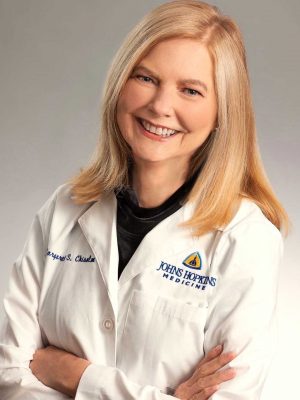
Dr. Margaret S. Chisolm is Professor of Psychiatry and Behavioral Sciences and Professor of Medicine at the Johns Hopkins University School of Medicine, where she directs the Paul McHugh Program for Human Flourishing. A board-certified psychiatrist with more than three decades of clinical experience, she works at the intersection of psychiatry, medical education, the humanities, and the moral dimensions of care. Her scholarly work has focused on psychiatric diagnosis and treatment, clinical excellence, and humanistic medical practice. She is the author of more than 200 scientific, clinical, and educational publications, including the textbook Systematic Psychiatric Evaluation and the award-winning book for patients and families From Survive to Thrive: Living Your Best Life with Mental Illness. Through her teaching and writing, she seeks to illuminate what it means to be human, what it means to be a physician, and how clinicians may serve patients with rigor, wisdom, and compassion.
Title: The Trouble with Trauma
Abstract: This talk examines the history of “trauma” in medicine as a case study in how language shapes conceptions of the human person. From Charcot to psychoanalysis to contemporary trauma discourse, clinical categories have functioned not only as descriptions of suffering, but as accounts of memory, agency, and selfhood. I argue that medicine is vulnerable to conceptual drift when well-written, emotionally compelling narratives are used to support explanations that are not falsifiable yet acquire clinical and moral authority. Trauma illustrates how such explanatory frameworks can gain legitimacy despite limited scientific grounding, shaping both professional practice and public imagination. Revisiting this history may help clinicians better recognize, and more carefully question, reductive explanations that can obscure the truth, complexity, and dignity of the suffering person.
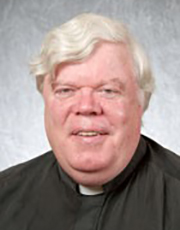
Rev. John J. Conley, SJ holds the Henry J. Knott Chair in Philosophy and Theology at Loyola University Maryland. He is a specialist in the areas of ethics, aesthetics, and early modern philosophy. Major works include The Suspicion of Virtue: Women Philosophers in Neoclassical France (Cornell University Press, 2002), Jacqueline Pascal: A Rule for Children (University of Chicago Press, 2003), Madame de Maintenon: Dialogues and Addresses (University of Chicago Press, 2004), Adoration and Annihilation: The Convent Philosophy of Port-Royal (University of Notre Dame Press, 2015), and The Other Pascals (University of Notre Dame Press, 2019).
Title: The Eugenic Distortion of Human Personhood
Abstract:
The eugenics movement has long argued that people with serious disabilities are somehow nonhuman. The movement often uses a veiled or corrupted language to mask its homicidal agenda.
Three moments in American history illustrate the problem.
In the 1927 Buck v. Bell decision, the United States Supreme Court declared Virginia’s forced-sterilization statute constitutional. Carrie Buck was condemned to be sterilized against her will because she was deemed to be an “imbecile” and an economic burden.
In the 1960s, states began to authorize eugenic abortion in cases of “fetal abnormality.” Philosophers such as Peter Singer provided theoretical support for the eugenic abortion of the disabled by the “criteria of personhood” they defended.
The philosophical justification of the homicide of the disabled has recently moved to apologies for infanticide. In their controversial article, “After-birth abortion: Why should the baby live?” bioethicists Alberto Giubilini and Francesca Minerva defended the killing of disabled newborn infants Their argument is simple: There is no significant moral difference between abortion (which they support) and infanticide.
The eugenicist dehumanization of the disabled practices linguistic corruption to make its case. “Imbecile” and the oxymoronic “postpartum abortion” other the (non) human being to be eliminated.
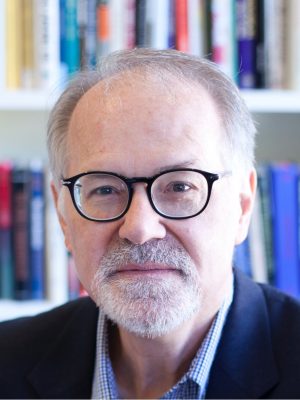
Joseph E. Davis is Research Professor of Sociology at the University of Virginia and Director of the Picturing the Human Project of the Institute for Advanced Studies in Culture. His research explores the intersecting questions of self, suffering, and cultural change. Recent projects include Chemically Imbalanced: Everyday Suffering, Medication, and our Troubled Quest for Self-Mastery (Chicago), the co-edited volume The Evening of Life (Notre Dame), and a special issue of Culture, Medicine, and Psychiatry on “Being Human in the Age of the Brain.” He writes a blog at psychologytoday.com called “Our New Discontents,” and is working on a book about growing up in our society.
Title: Languages of Suffering: Neuro Talk as Self Suffocation
Abstract: Languages of suffering are those vocabularies with which we interpret, explain, and deal with our experiences of distress, deprivation, and discontent. There are any number in circulation. The existential, for instance, in which distress like grief is conceived as an inescapable part of our reality. The religious, expressed, for example, in Pope John Paul II’s apostolic letter, Salvifici Doloris, where he writes of “pain of a spiritual nature” that finds its meaning in the revelation of divine love on the Cross. Or what is sometimes called the “moral,” which was our common-sense way of speaking about the reasons for our struggles. Until recently.
Over the last half century, a new language of suffering has arisen in psychiatry that roots mental disorder in faulty neurobiology. This language not only displaced depth psychology but brought a profound shift in the way that ordinary people explain personal struggles and grapple with the very nature of selfhood—of who we think we are and what shapes us. Now, people often frame their suffering in terms of a malfunctioning brain. Though championed as more scientifically sound and humane, reductionist neuro talk has many troubling consequences, a kind of “self-suffocation,” to borrow a phrase from Kierkegaard.
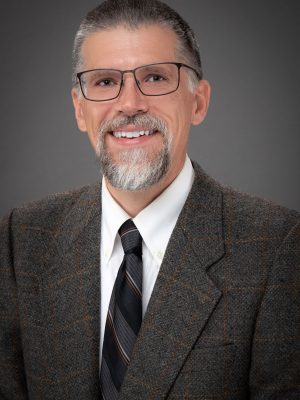
Chad Engelland (Ph.D., The School of Philosophy, The Catholic University of America) is professor of philosophy at the University of Dallas. He is the author of many books, including Divine Hiddenness: God the Creator and Phenomenology (Cambridge 2026), Phenomenology (MIT 2020) and Ostension: Word Learning and the Embodied Mind (MIT 2014), and the editor of Language and Phenomenology (Routledge 2021). His writings have appeared in such journals as the Review of Metaphysics, The Thomist, New Blackfriars, Journal of the History of Philosophy, and the Journal of the American Philosophical Association.
Title: Just What Is ”Interesting,” Anyway?
Abstract: Alan Turing said a machine could be said to think if its programmer regarded its output as interesting, and this claim raises an interesting question. What makes something interesting? This address will argue that the word “interesting” indicates that something calls for perceptive thinking rather than merely calculative or associative processing; it is something that makes sense within the recognition of part-whole relations including the frame of reference of human life and, ultimately, reality as a whole. As with anything else, there is good reason to find our machines interesting; they do, after all, give us much to think about, but to elucidate that interest is something that only we perceptive thinkers can do.
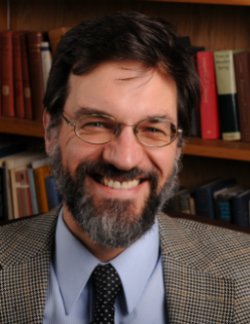
Michael Gorman holds the Pritzl Chair in Philosophy at The Catholic University of America, where he has taught since 1999. He holds doctorates in philosophy and theology, and he is the author of over forty scholarly articles and two books, Aquinas on the Metaphysics of the Hypostatic Union (Cambridge University Press, 2017) and A Contemporary Introduction to Thomistic Metaphysics (Catholic University of America Press, 2024).
Title: Kripkean Thoughts on the Name “Jesus”
Abstract: We human beings are most naturally suited to talking and thinking about individual material objects, and the most fundamental way we fix our thought on them is through sensation. How, then, can we think of God, who is immaterial and therefore beyond sensation? There are, in fact, a number of ways in which we successfully do so, but this success is bound up with certain limitations and obscurities. Building on the thought of the philosopher Saul Kripke (1940-2022), I propose that at least some of these difficulties can be overcome, and a kind of privileged access obtained, through use of the name “Jesus.”
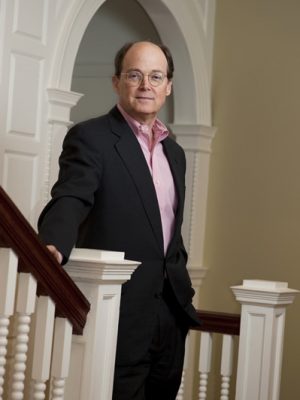
James Davison Hunter is LaBrosse-Levinson Distinguished Professor of Religion, Culture, and Social Theory at the University of Virginia. He completed his doctorate at Rutgers University in 1981 under the direction of Peter L. Berger and then joined the faculty of the University of Virginia in 1983.
Hunter has written ten books, edited four books, and published a wide range of essays, articles, and reviews—all variously concerned with the problem of meaning and moral order in a time of political and cultural change in American life. His newest book is Democracy and Solidarity: On the Cultural Roots of America’s Political Crisis (Yale, 2024). Read More
Title: The Denial of the Moral as Lived Experience
Abstract: Alasdair MacIntyre calls us “moral stutterers,” but the diagnosis understates the problem: ours is not a difficulty of articulation but a loss of moral vocabulary itself. This essay argues that the incoherence MacIntyre identifies stems from the denial of the moral as a category of lived experience—not an abandonment of moral language, but its thinning into a grammar too impoverished for the complexities of everyday life. Tracing this impoverishment from the Enlightenment’s materialist turn and Freud’s reduction of the soul to biological drive, through the pedagogical history of American moral education’s long accommodation to pluralism—from Cotton Mather through Horace Mann to John Dewey—the essay shows how both progressive and conservative moral languages became instrumentalized, detached from the particular communities and traditions that once gave them binding force. This has enormous consequences for the the moral languages of self and suffering. Recovering the moral, requires not a more inclusive generic morality but a new paradigm that re-embeds ethical formation within the concrete institutions, traditions, and communities young people actually inhabit.
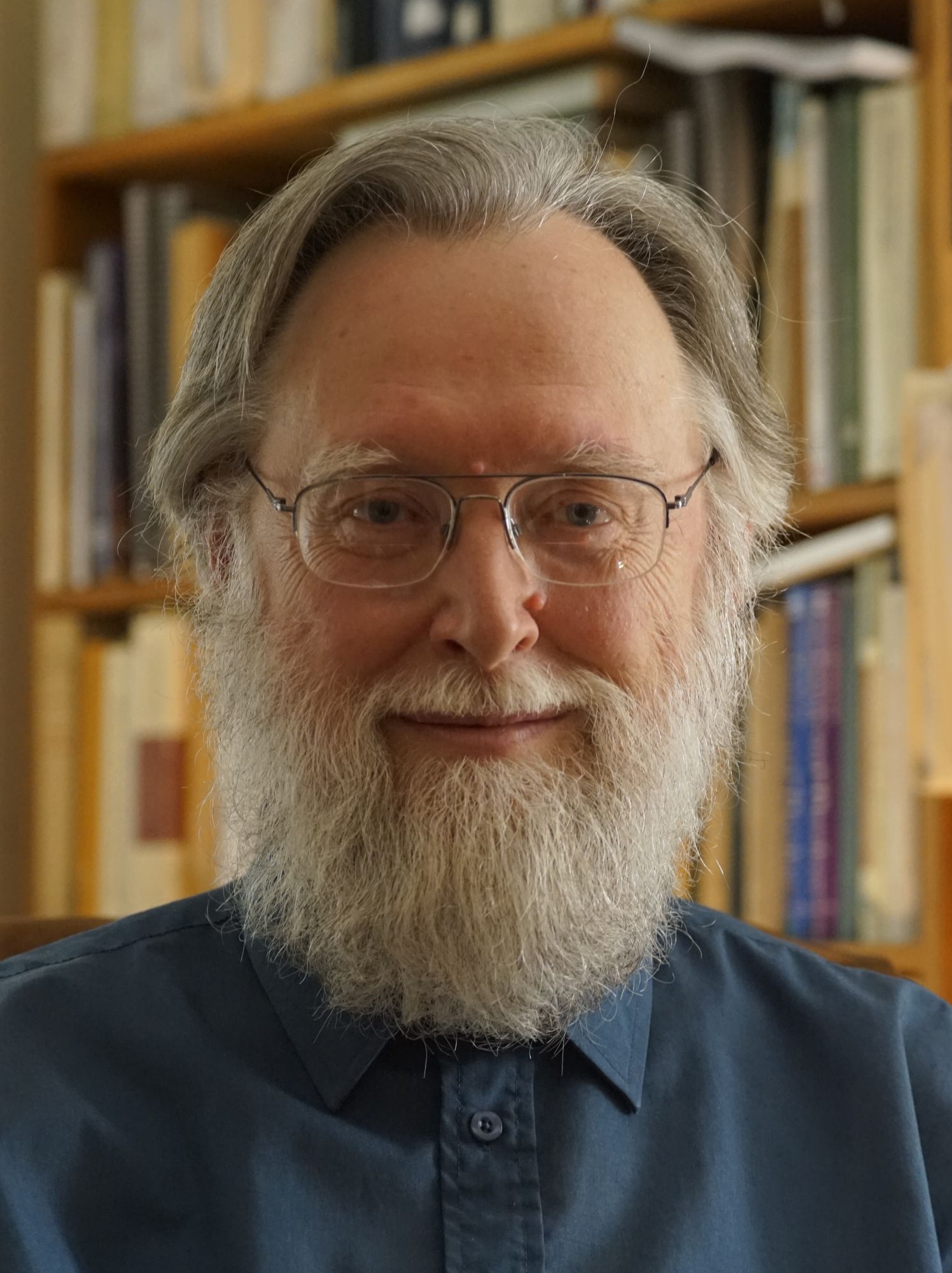
Dr. Reinhard Hütter is Visiting Professor of Catholic Theology at Duke University Divinity School and Professor Emeritus of Fundamental and Dogmatic Theology at the Catholic University of America. He held a tenured full professorship at Duke University, a visiting professorship at the University of Jena, the Randall Chair at Providence College, and the
Paluch Chair at Mundelein Seminary/University of Saint Mary of the Lake. His research specializes in systematic and philosophical theology, emphasizing the relationship
between faith and reason, theological anthropology, and the enduring legacies of St. Thomas Aquinas and St. John Henry Newman.
Appointed by Pope Francis, Dr. Huetter served on the Vatican’s International Theological Commission (2021-26). He is an ordinary academician of the Pontifical Academy of St. Thomas Aquinas and a past president of the Academy of Catholic Theology. His recent publications include Bound for Beatitude: A Thomistic Study in Eschatology and Ethics, John Henry Newman on Truth and Its Counterfeits, and the forthcoming Tradition in Act: The Development of Doctrine and Its Counterfeits, After Newman.
Title: “A Message from across the Seas:” Pope Leo XIV’s Encyclical Letter Magnifica Humanitas—
Fecisti Nos Ad Te—An Augustinian Ressourcement for the 21st Century
Abstract: Drawing upon Walker Percy’s The Message in the Bottle, this presentation frames Magnifica Humanitas as a vital “message from across the seas,” a transformative communication meant to address the existential and moral challenges of the digital age, especially those posed by artificial intelligence, transhumanism, and the technocratic paradigm. It highlights the proper reception of a papal encyclical: not as mere factual information or political news, but as authoritative guidance of mind and will requiring religious submission of will and intellect. It also relates the treatment of AI in Magnifica Humanitas to two predecessor documents, Antiqua et Nova as well as Quo Vadis, Humanitas.
Dr. Veronica Roberts Ogle is Associate Professor of Political and Social Thought and the Augustinian Catholic Intellectual Tradition in the Humanities Department at Villanova University. She is author of Politics and the Earthly City in Augustine’s City of God (Cambridge University Press, 2020) and has published on Augustine in journals such as Journal of Religious Ethics, Augustinian Studies, and The New Ressourcement.
Title: Two Cities, Two Construction Sites: Learning to Build with Augustine and Pope
Leo
Abstract: In this presentation, I will draw out the Augustinian resonances in Pope Leo’s
social vision to make sense of his recent Magnifica Humanitas, drawing on other addresses from his pontificate that further flesh out this vision. What I will argue, in brief, is that Pope Leo has taken Augustine’s teaching on the two cities, and transposed it in Magnifica Humanitas onto his concept of the two building sites. Exploring the difference between the two building projects that
are there undertaken, Pope Leo invites us to carry them with us as we consider what it would mean to cultivate a “civilization of love” in today’s world. Ultimately, Pope Leo offers us a social vision and a prayerful mode of discernment that are of a piece, and further, indispensable if we are to navigate the thorny questions that AI poses well.
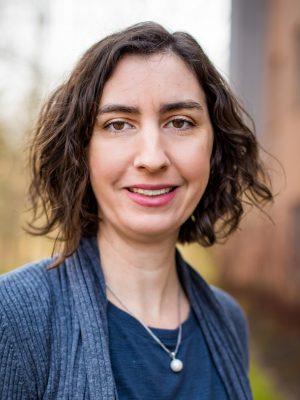
Dr. Amy Gilbert Richards is a Faculty Fellow in the Master of Arts in Teaching in
Classical Education program in the Templeton Honors College at Eastern
University, where she also teaches in their undergraduate Great Books core
program. She received her PhD in Philosophy from the University of Virginia.
Her research focuses on the intersection of philosophical anthropology,
philosophy and theology of disability, and classical education. She is the author
of Disability and Classical Education: Student Formation in Keeping with our
Common Humanity. Dr. Richards lives in Havertown, PA with her husband and
their three girls.
Title: Disability, Telic Attention, and the End of Education
Abstract: As our understanding of disability serves as a crucible to reveal our anthropology, so the patterns of attention in our classrooms serve to reveal our understanding of the nature of
education. In light of these joint claims, I will argue that true education demands grounding in telic attention–attention to another in light of her telos, in light of the kind of being she is. And failure to consider disability risks obscuring the nature of this telos. For, as St. John Paul II argues, “The disabled person, with all [his or her] limitations and suffering . . . forces us to question ourselves . . . on the mystery of man.” This truth comes to the fore when we put the Incarnate Christ, especially Christ as the Crucified, at the heart of our understanding of our own telos. And the telic attention that proceeds from this heart has deep implications for our practices of education.
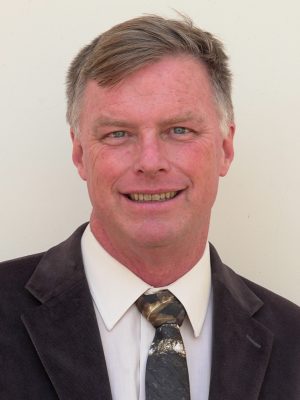
Dr. Andrew T. Seeley, is President and Senior Fellow of the Boethius Institute for the Advancement of Liberal Education. He received a Licentiate from the Pontifical Institute in Medieval Studies in Toronto and a Ph.D. in Medieval Studies from the University of Toronto. Over his three decades as a Tutor at Thomas Aquinas College in California, Dr. Seeley completed teaching every subject in its demanding, integrated Great Books curriculum. Desiring to share his love of learning and teaching, Dr. Seeley co-founded the Institute for Catholic Liberal Education in 2005, where he served as Executive Director for 12 years. He has taught Master’s courses in education for the University of Dallas and the Augustine Institute. He is coauthor of Declaration Statesmanship: A Course in American Government. In recognition of his work in the renewal of liberal education, he was named the 2023 recipient of the Circe Institute’s Paideia Prize.
Title: The Permanent Relevance of Education in the Word
Abstract: In A History of Education in Antiquity, his classic work on the original classical education, H.I. Marrou emphasizes “its surprising emphasis on the idea of speech – λόγος – its predominantly literary tone. The Word was regarded as the prime instrument of any culture and any civilization, the best means of ensuring contact and communication between men.” This education, which came to be known as the
Trivium, was the dominant form of general education into the 19th century. The scientific spirit of the Enlightenment, as expressed by men such as Bacon, Descartes, and Lavoisier brought such education into contempt and eventually drove it out of our schools, replacing it with training in scientific jargon and symbolic expression.
In my talk, I will argue for the permanent relevance of the Trivium while indicating the role it is playing and can play in the current renewal of education that has adopted the name, “classical”.
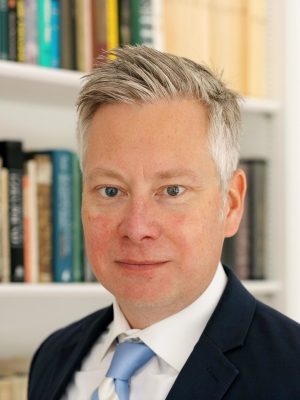
James Matthew Wilson is the Cullen Foundation Chair in English Literature and the founding director of the MFA program in Creative Writing at the University of Saint Thomas. The author of sixteen books, his most recent collection of poems is Saint Thomas and the Forbidden Birds (Word on Fire, 2024). The Strangeness of the Good (2020), won the poetry book of the year award from the Catholic Media Awards. The Dallas Institute of Humanities awarded him the Hiett Prize in 2017; Memoria College gave him the Parnassus Prize, in 2022; and the Conference on Christianity and Literature twice gave him the Lionel Basney Award. In addition to his role at the University of Saint Thomas, he serves as poet-in-residence of the Benedict XVI Institute, scholar-in-residence of Aquinas College, editor of Colosseum Books, and poetry editor of Modern Age magazine. He has also served as writer-in-residence at Grace College, Hillsdale College, and Oklahoma Baptist University and as distinguished visiting professor at Holy Cross College.
Title: Memory and the Living Word
Abstract: Readers of the Phaedrus will know that the miseries, vexations, and losses that threaten the intellectual life in our day are modern permutations of ancient ills. Technological innovation
and the accompanying post-literacy of modern societies have put in question both the end of
human life and the kind of formation that allows for our flourishing. In question is both the integrity of logos and the vitality of it. At the risk of special pleading for a minor art form in an age with major problems, I will consider the nature of poetry (in its essence) and what it tells us of the relation of spoken to written word and what both these things have to do with the formation of our memory to make us ever more human.
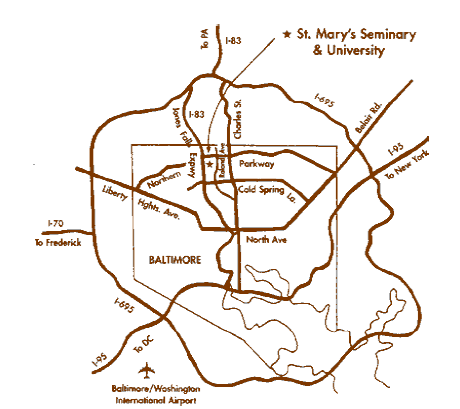
All sessions will take place at St. Mary’s Seminary
1:45 p.m. – Mass
3:00 – 4:15 p.m. – Plenary Panel I: Teaching the Creatures Who Use Words
Andrew Seeley and Amy Richards
5:30 Dinner
7:30 p.m. – 8:45 p.m. – Plenary Lecture I
Chad Engelland
8:45 p.m. – Compline
8:15 – 9:00 a.m. – Breakfast
9:00 – 10:15 a.m. – Plenary Panel II: Language of Self and Suffering
Joe Davis and James Davison Hunter
10:45 a.m. – 12:00 p.m. – Plenary Panel III: The Holy See’s Response to AI
Reinhard Hütter and Veronica Ogle
12:15- 1:30 p.m. – Lunch
1:45 – 3:15 p.m. – Contributed Papers
3:45 – 5:00 p.m. – Plenary Lecture II
James Matthew Wilson
5:30 p.m. – Mass
6:20 p.m. – Cocktails
7:00 p.m. – Awards Banquet
7:30 a.m. – Mass
8:15 a.m. – Breakfast
9:15 – 10:30 a.m. – Plenary Panel IV: The Word and the Words of God
Michael Gorman and Kelly Anderson
11:00 a.m. – 12:15 p.m. – Plenary Panel V: Medical Threats to Persons
Meg Chisholm and Rev. John Conley, S.J.
St. Mary’s Seminary and University Center for Continuing Formation
Those attending the convention may reserve a room to stay at the seminary when they register for the convention. Rooms are available Thursday, Friday, and Saturday nights September 24-27, and the rate is $100 per night. Rooms are simple and include a queen bed and private bathroom. If you have already registered for the convention and would like to add a room reservation, please email convention@catholicscholars.org.
Other nearby hotel options (convention rate not available):